
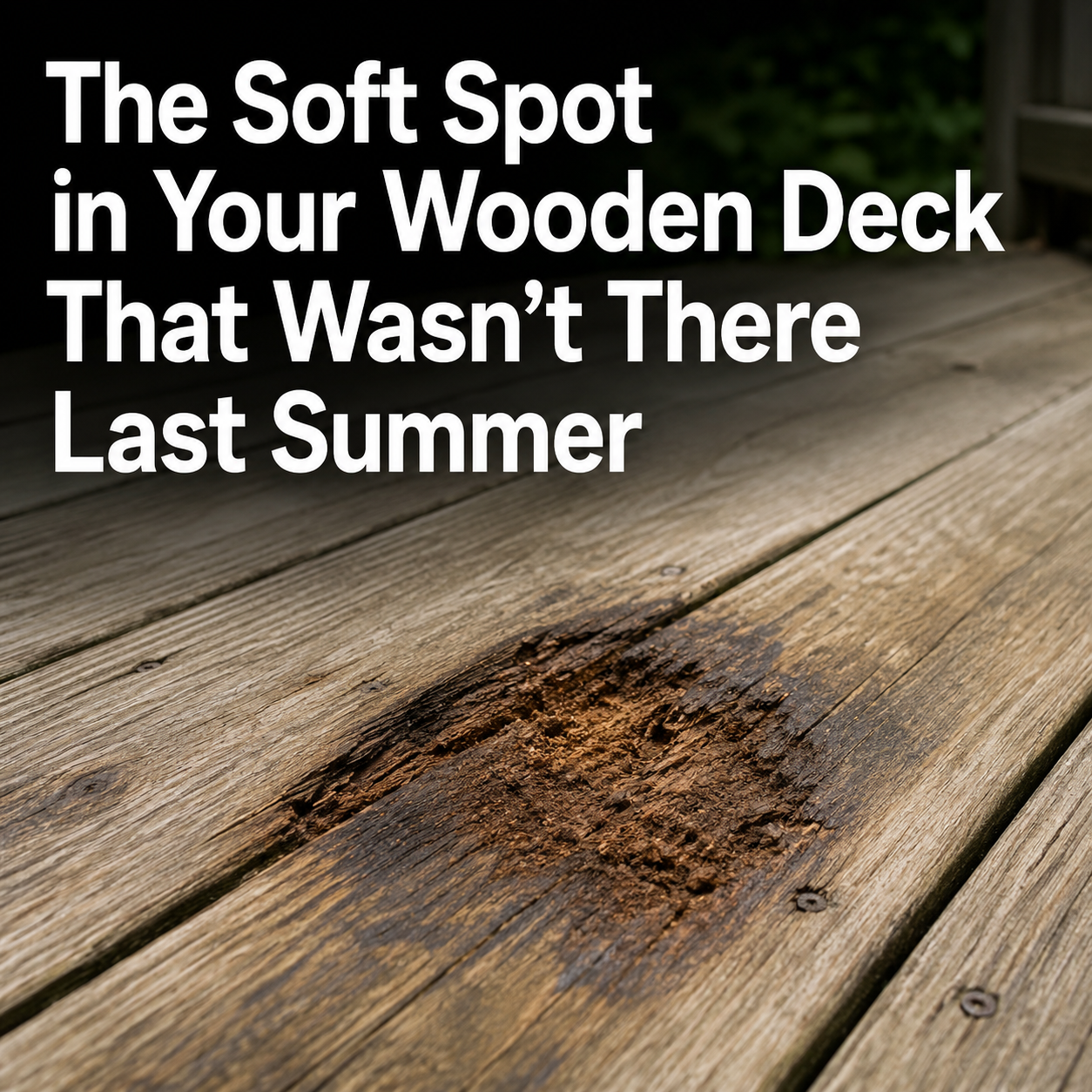
You step onto your deck like you always do, but one section suddenly feels softer than before. It may dip slightly under your weight, feel springy, or sound hollow when stepped on. At first, it seems minor. Timber is outdoors year-round, after all, so a little wear can appear normal.
But timber rarely loses strength without a reason. A soft spot in a wooden deck is usually a sign that something beneath the surface has started affecting the structure. Whether it is trapped moisture, timber decay, or hidden pest activity, these problems tend to develop gradually before becoming obvious. By the time the deck starts feeling different underfoot, the issue may already be spreading below the boards.
Why Wooden Decks Change Over Time
Outdoor timber constantly faces changing environmental conditions. Heat, rain, moisture fluctuations, direct sunlight, and seasonal expansion and contraction all place stress on decking materials over time. In Australia’s climate, decks are exposed to harsh UV rays, humidity, and sudden weather changes that slowly affect the condition of the wood.
Even well-constructed decks naturally age. Timber expands when it absorbs moisture and contracts as it dries. Over repeated cycles, small cracks can appear, surfaces can weaken, and protective finishes can gradually wear down. If maintenance is delayed or moisture remains trapped in certain areas, sections of the deck may start deteriorating faster than expected. Some changes remain cosmetic for years, while others begin affecting the structural integrity of the timber underneath.
When Moisture Starts Damaging the Timber
Moisture is one of the most common causes of weakening timber decks. Water does not always damage timber immediately. Instead, it slowly penetrates vulnerable areas and weakens the fibres over time.
Trapped water beneath decking boards is a frequent issue, especially where airflow underneath the deck is limited. Poor drainage around the deck can allow water to collect near support posts or joists. Leaking outdoor taps, irrigation systems, or downpipes nearby can also keep surrounding timber damp for extended periods.
In some cases, the problem starts below ground level. Damp soil around deck supports may transfer moisture upward into the timber structure. Decks built too close to the ground are particularly vulnerable because airflow underneath is restricted, preventing the timber from drying properly after rain. Once timber remains damp for long periods, decay can begin developing inside areas that are not immediately visible.
Why Pests Often Target Weak or Damp Timber
Moisture-related damage often creates ideal conditions for timber pests. Damp timber becomes softer and easier for pests to enter, tunnel through, or nest inside. Hidden sections beneath decking boards or inside support structures can provide quiet, sheltered conditions where damage spreads unnoticed.
Termites, wood borers, and fungal decay are all strongly associated with excess moisture in timber structures. Fungi can begin growing when timber moisture content remains elevated, gradually breaking down the wood fibres and weakening the structure.
Termites are particularly difficult to detect early because they often feed from the inside out, leaving the surface appearing mostly intact while the interior becomes hollow. Wood borers may also remain hidden for long periods while larvae tunnel through the timber internally. Once pests establish themselves inside weakened timber, the deterioration can quietly spread underneath the deck long before major surface damage becomes obvious.
Signs the Problem May Be More Serious
A soft or spongy feeling underfoot is usually one of the earliest warning signs that timber strength has been compromised. However, other symptoms often appear alongside it. Cracks spreading across deck boards may indicate moisture movement or internal weakening. Hollow sounds when tapping the timber can suggest hidden cavities beneath the surface. Visible sagging or uneven sections may point to structural deterioration affecting joists or supports underneath.
Some homeowners also notice small holes, fine dust-like residue, or powdery material near damaged sections. These signs may indicate timber borer activity or advanced timber decay. When multiple warning signs appear together, the damage is often deeper than the visible surface layer.
Why Deck Damage Often Goes Unnoticed
Deck deterioration is easy to overlook because it develops slowly. Since outdoor timber is constantly exposed to weather, many homeowners assume gradual changes are simply part of normal ageing. Small soft spots may initially feel insignificant, especially if the deck still looks mostly intact from above.
Moisture damage and pest activity often begin underneath the boards where they remain hidden from everyday view. By the time the timber starts feeling unstable, the problem may have already spread through surrounding areas. People also become familiar with how their deck feels over time, making subtle changes less noticeable until a section suddenly feels unsafe.
Why Ignoring the Soft Spot Can Lead to Bigger Repairs
A weakened section of decking rarely remains isolated for long. Once moisture, decay, or pests begin affecting one area, surrounding timber often becomes vulnerable as well. Structural instability is one of the biggest concerns. As support timbers weaken, sections of the deck may start sagging or shifting under weight. In severe cases, damaged joists or supports can compromise the safety of the entire structure.
Repair costs also increase significantly when problems spread beyond a single board. Replacing isolated timber sections is usually far simpler than rebuilding major structural components underneath the deck. Moisture and pest-related deterioration can also continue silently beneath surrounding boards even after visible surface damage appears.
When Professional Help Becomes Important
If the timber continues to soften or signs of pest activity appear, many homeowners begin searching for Pest Control near me services to determine whether hidden infestations are contributing to the damage. Professional inspections can help identify whether the issue involves moisture-related decay, termite activity, wood borers, or broader structural concerns. In many situations, surface symptoms alone are not enough to determine the full extent of the problem underneath the deck. Early assessment can prevent hidden damage from progressing further into support structures or adjacent timber areas.
What Homeowners Should Check Early
When a soft spot first appears, checking the surrounding conditions early can help prevent wider damage. If the underside of the deck is accessible, inspecting below the affected area may reveal signs of trapped moisture, decaying timber, or pest activity.
Drainage around the deck should also be checked carefully. Water pooling near supports, blocked drainage paths, or leaking fixtures nearby can all contribute to long-term moisture problems. Areas with poor ventilation underneath the deck may remain damp for extended periods after rain. It is also important to monitor whether the soft section grows larger over time. Expanding damage often indicates that the underlying cause remains active.
Timber Usually Changes for a Reason
A soft section in a wooden deck is rarely random wear. Timber changes gradually in response to moisture, environmental exposure, structural stress, and hidden pest activity. While some ageing is normal, softness, sagging, or hollow areas often point to deeper issues developing beneath the surface. The earlier these changes are noticed, the better the chance of avoiding widespread structural repairs later. Whether the cause is moisture damage, timber decay, or pests hidden underneath the deck, paying attention to small warning signs early can make a significant difference.
FAQs
Why does my deck suddenly feel soft in one spot?
Soft spots usually develop because moisture, timber decay, or pest activity has weakened the wood beneath the surface over time.
Can moisture alone damage a timber deck?
Yes. Constant moisture exposure can gradually weaken timber fibres, encourage fungal decay, and reduce the structural strength of decking boards and supports.
What pests commonly affect wooden decks in Australia?
Termites and timber borers are among the most common timber pests affecting decks, especially in damp or poorly ventilated conditions.
Is a hollow sound in timber a bad sign?
Often, yes. Hollow sounds may indicate internal timber damage, decay, or pest tunnelling beneath the visible surface.
Can deck damage spread to nearby timber?
Yes. Moisture and pest activity can spread into surrounding boards, joists, and support structures if left untreated.
Should small soft spots be inspected immediately?
Yes. Early inspection helps identify whether the problem is minor surface wear or a sign of more serious structural or pest-related damage.