
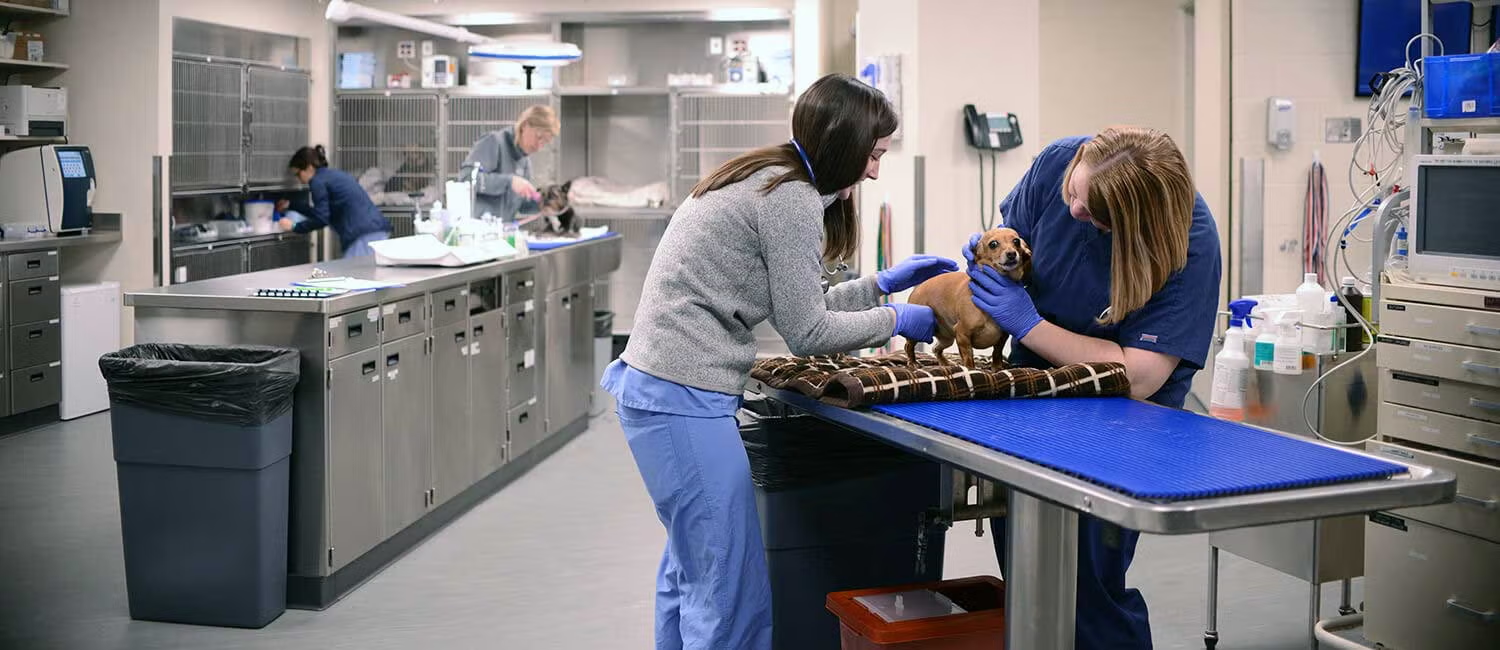
You might be watching your pet a little too closely right now, wondering if that limp, that cough, or that skipped meal is “urgent” or something that can wait. It often starts with something small. A paw held up, a bout of vomiting, a sudden change in behavior. Then the questions begin. Do you call your regular Midlothian, VA veterinarian first? Do you rush to the animal urgent care? Are you overreacting? Are you not reacting fast enough?
That is a hard place to be. You care deeply about your pet, you do not want them to suffer, and you also do not want to spend all night in a waiting room if it turns out to be something minor. Because of that tension, you might feel stuck between two doors. General practice on one side, veterinary urgent care or emergency on the other.
Here is the short version. General practice veterinarians handle routine and ongoing health needs. Veterinary urgent care vs general practice is mostly about time and severity. Urgent care steps in when your pet needs prompt attention, but is not at the edge of life and death. Knowing the difference can save you time, money, and a lot of anxiety, and more importantly, can get your pet the right help at the right moment.
Why is it so hard to tell what your pet really needs
Part of the stress comes from how pets show pain. They hide it. A dog with a serious illness may still wag. A cat with a dangerous urinary blockage may only seem “a little off.” So you watch, second-guess, and Google symptoms until your stomach is in knots.
The problem is that many signs overlap. Vomiting can be caused by a simple dietary mistake or by a life-threatening blockage. A limp can come from a minor sprain or a fracture. Because of this, you may fear that by waiting for your regular veterinarian, you might be gambling with your pet’s safety. On the other hand, rushing to urgent or emergency care for every concern can be exhausting and expensive.
So, where does that leave you? It helps to understand what each type of care is built to handle. The American Veterinary Medical Association explains how primary care fits into a pet’s life and why routine veterinary care matters for long-term health, which is the foundation of all other decisions.
What does a general practice veterinarian actually handle
Your general practice veterinarian is your pet’s primary doctor. They know your pet’s history, their quirks, their past illnesses, and often your family’s worries as well. This is where you go for wellness and ongoing problems, not sudden crises.
Typical general practice care includes things like:
• Annual or semiannual exams and vaccines.
• Dental cleanings and basic oral care.
• Long-term management of problems like arthritis, allergies, or diabetes.
• Non-urgent skin issues, ear infections, or mild tummy upsets.
• Spay or neuter surgeries and other planned procedures.
Because they know your pet over time, they are in a strong position to notice subtle changes. They can compare “today’s exam” to last year’s and pick up early disease. They can also guide you on what is normal for your particular pet and what is not.
The drawback. General practices usually work by appointment. Same-day visits are sometimes possible, but not guaranteed. If your pet suddenly gets worse on a Friday evening, you may find that your trusted clinic is closed. That is often the moment when people turn to animal urgent care.
Where does animal urgent care fit between general practice and true emergency
Think of veterinary urgent care as the in between space. It is for problems that cannot wait days, but are not yet emergencies. A helpful way to frame it comes from resources on primary, urgent, and emergency care, such as this guide on whether your pet needs primary, urgent, or emergency care from the University of Minnesota, which you can see here.
Urgent care is often appropriate for things like:
• Repeated vomiting or diarrhea in an otherwise stable pet.
• A new limp without obvious bone exposure or severe swelling.
• Eye redness or squinting that starts suddenly.
• Minor cuts, small wounds, or mild bite injuries.
• Sudden but moderate pain, such as yelping when picked up, while still walking and breathing comfortably.
• Trouble urinating that started recently, but the pet is still able to pass some urine.
These are the “this cannot wait days, but I do not think my pet is dying right now” moments. Urgent care clinics usually have extended hours and can often see walk-ins. They can perform exams, run basic tests, give medications, and stabilize your pet. They may then refer you back to your general practice for follow-up, or to a full emergency hospital if things are worse than they first appeared.
True emergency care is for conditions that threaten life or could cause permanent harm if treatment is delayed. The Ohio State University Veterinary Medical Center shares examples of what belongs in general practice, urgent care, or emergency care in this chart-based guide, which you can review here.
How can you compare general practice, urgent care, and emergency care at a glance
When your mind is racing, a simple comparison can help you sort your thoughts. The table below is not a replacement for professional advice, but it can give you a starting point for choosing between your regular veterinarian, urgent care, and the emergency room.
| Type of care | Typical hours | Best for | Examples of situations | Cost range (relative) |
|---|---|---|---|---|
| General practice | Weekdays, some evenings | Routine and ongoing care | Wellness exams, vaccines, chronic skin issues, arthritis checks | Lower |
| Urgent care | Extended hours, some nights/weekends | Time sensitive, non-life-threatening issues | Persistent vomiting, new limp, minor wounds, eye irritation | Moderate |
| Emergency care | 24/7 | Life threatening or rapidly worsening problems | Hit by a car, trouble breathing, collapse, seizures, uncontrolled bleeding | Highest |
Costs and availability vary by location, but the pattern is usually the same. The more urgent and resource-intensive the care, the higher the bill, and the more focused the team is on immediate survival rather than long-term management.
Three steps you can take right now to prepare and protect your pet
1. Create a simple decision plan before an emergency happens
When emotions are running high, even small choices feel impossible. A short written plan can calm some of that panic. Include:
• The name, address, and phone number of your general practice veterinarian.
• The nearest animal urgent care or emergency hospital, with directions.
• Any known conditions your pet has, plus current medications and doses.
Keep this on your phone and on your fridge. Share it with other family members or pet sitters so that if something happens when you are away, no one is starting from zero.
2. Learn the “red flag” symptoms that always mean emergency
There are some situations where you skip urgent care and general practice and go straight to emergency services. These include:
• Struggling to breathe, blue or very pale gums.
• Collapse, loss of consciousness, or repeated seizures.
• Hit by a car, fall from a height, or any major trauma.
• Inability to urinate, especially in male cats.
• Uncontrolled bleeding or large, deep wounds.
• Sudden bloated belly with restlessness and retching without producing vomit.
For these, you do not wait for regular office hours. You do not watch and see. You go directly to the nearest emergency facility, and you can call on the way to let them know you are coming.
3. Use your regular veterinarian as a guide when you are unsure
When the situation feels gray instead of black and white, reach out to your general practice clinic first if they are open. Many teams are willing to talk through symptoms over the phone and tell you whether they can see your pet the same day or if you should head to urgent or emergency care instead.
Even a short call can give you clarity. You can say what you see, how long it has been happening, and how your pet is acting overall. They may say, “come in now,” “watch closely and call back if this changes,” or “go to urgent care or emergency right away.” Hearing that guidance from someone who knows your pet can ease a lot of fear.
Bringing it all together so you feel less alone with the decision
You are not expected to sort every symptom perfectly. You are expected to care, to pay attention, and to reach out when something feels wrong. That instinct is already doing a lot for your pet. The real difference between veterinary urgent care and general practice is about timing, tools, and focus. General practice centers on long-term health. Urgent care and emergency focus on what is happening right now.
When you remember that, your choices get a little clearer. Routine concerns and ongoing conditions fit with your primary veterinarian. Sudden but stable problems often fit with urgent care. Alarming, fast-moving, or life-threatening signs belong in emergency care. You do not have to be perfect. You just have to act.
Your pet does not need you to know everything. They need you to notice, to care, and to seek help. When you do that, you are already doing the most important part of animal urgent care, no matter which door you walk through.